نوع مقاله : مقاله علمی - پژوهشی
تازه های تحقیق
عنوان مقاله English
نویسندگان English
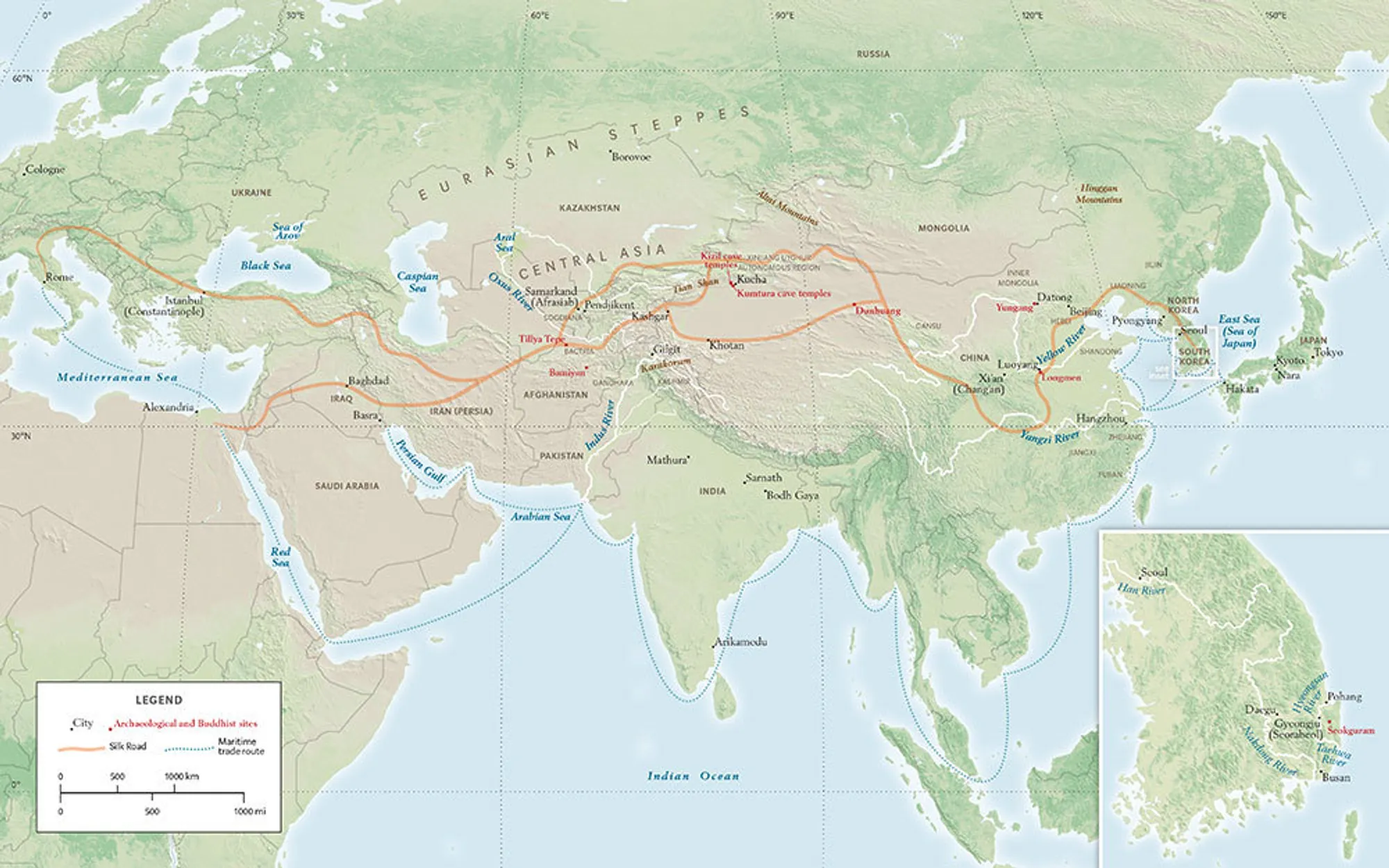
Previous understanding, based on older research, suggested that relations between Iran and the Korean Peninsula were limited to recent centuries, not extending beyond a hundred years. However, recent studies indicate that the history of interactions between these two ancient lands dates back approximately 1500 years. The earliest signs of connection between Iran and the Korean Peninsula are observed during the Korean Three Kingdoms period (especially Silla) and the Sasanian Empire in Iran. Although direct evidence in this regard is scarce and scattered, numerous indirect documents exist that help us in proving this claim. Therefore, answering the following questions becomes important:What kind of relations existed between Iran and the Korean Peninsula in antiquity? And what archaeological, historical, and cultural evidence and documentation confirm these long-standing relations?This research, utilizing evidence and documents available in historical sources and archaeological findings, as well as employing a descriptive-analytical method, delves into the analysis and examination of the relations between Iran and the Korean Peninsula in antiquity. The most significant of this evidence includes findings from ancient sites, excavated artifacts, and artistic patterns. The results of this study clearly demonstrate that Iran, during the Sasanian period, had extensive interactions, particularly in the cultural and artistic fields, with the Korean Peninsula. The overall outcome of this research is derived through the examination of glass vessels and their manufacturing techniques, animal patterns, and the mutual influence of various artistic styles
کلیدواژهها English
منابع و مآخذ
فارسی:
بهزادی، رقیه، 1373، قومهای کهن در آسیای مرکزی و فلات ایران، تهران: وزارت امور خارجه.
رایس، تامارا تالبوت، 1388، سکاها، ترجمه: رقیه بهزادی، تهران: طهوری.
ستودهنژاد، شهاب، 1383، بازتاب تمدنهای اشکانی- ساسانی بر سه پادشاهی در شبهجزیره کره، میراثها و پیوندهای فرهنگی- قومی ایران باستان با مردم کره، تهران: آشیانه کتاب.
فرامکین، گرگوار، 1372، باستانشناسی در آسیای مرکزی، ترجمه: صادق ملکشهمیرزادی، تهران: وزارت امور خارجه.
کورت، آملی، 1378، هخامنشیان، ترجمه: مرتضی ثاقبفر، تهران: انتشارات ققنوس.
گانتر، آن کلایبرن و پل جت، 1383، فلزکاری ایران در دوران هخامنشی، اشکانی و ساسانی، ترجمه: شهرام حیدرآبادیان، تهران: گنجینه هنر.
گیرشمن، رمان، 1370، هنر ایران در دوران پارتی و ساسانی، ترجمه: بهرام فرهوشی، تهران: شرکت انتشارات علمی و فرهنگی وابسته به وزارت فرهنگ و آموزش عالی.
محمدی، محمد و غلامعلی حاتم، 1390، «نقاشی سغدی سرچشمهای برای نگارگری ایرانی»، دو فصلنامه علمی- پژوهشی مطالعات هنر اسلامی، 1390، ش. 14، صص. 80-61.
نامی، محمدحسن، 1386، جغرافیای کشور کره جنوبی، تهران: انتشارات سازمان جغرافیایی نیروهای مسلح.
لاتین:
Abe And Others, Yoshinari, 2021, “Did Ancient Glassware Travel The Silk Road? X-Ray Fluorescence Analysis Of A Sasanian Glass Vessel From Okinoshima Island, Japan, Journal Of Archaeological Science, 2021, 40, 1-8.
Abetekov And Yusupov, A-H، 1994, “Ancient Iranian Nomads In Western Central Asia”, Published In History Of Civilizations Of Central Asia، The Development Of Sedentary And Nomadic Civilizations: 700 B.C. To A.D. 250, Volume II, Edited By Janos Harmattan, Unesco: France.
Akbarzadeh, Daryoosh, 2020, “A Note On Sasanian-Buddhist Object Of Gyeongju National Museum”, Studies In Ancient Art And Civilization, 2020, 24, 267-275.
Andrea, Alfred, 2014, “The Silk Road In World History: A Review Essay”, Asian Review Of World Histories, 10.12773, 105-127.
Andreeva and Atwood, Petya V and Christopher P, 2017,"Camp and audience scenes in late iron age rock drawings from Khawtsgait Mongolia", University of Pennsylvania United States, pp.1-9.
Azarpay, Guitty; 1986, ”Art In Iran”, Encyclopedia Iranika.
Https://Www.Iranicaonline.Org/Articles/Art-In-Iran-Vi-Pre-Islamic-Eastern-Iran-And-Central-Asia
Choe, Kwangshik, 2014, “Silla Art And The Silk Road”, International Journal Of Korean History, 2014, Vol.19, No.1, 1-22.
Chung, Yang-Mo And Others, 2000, Arts Of Korea، The Metropolitan Museum Of Art, Yale University Press: New York.
Compareti, Matteo, 1984, " AFRASIAB II. Wall Paintings", Last Updated: July 28, 2011, Vol.I,https://iranicaonline.org/articles/afrasiab ii-Wall-paintings-2
Enoki And Others, K, 1994, “The Yueh-Chih And Their Migrations”, Published In History Of Civilizations Of Central Asia, The Development Of Sedentary And Nomadic Civilizations: 700 B.C. To A.D. 250, Volume II, Edited By Janos Harmattan, Unesco: France.
Hansen, Valerie, 2012, The Silk Road A New History, Oxford University Press: United States (New York).
Harmatta, J, 1994, In History Of Civilizations Of Central Asia, The Development Of Sedentary And Nomadic Civilizations: 700 B.C. To A.D. 250, Volume II, Edited By Janos Harmattan, Unesco: France.
Koshelenko And Pilipko, G.A- V.N, 1994, “Parthia”, Published In History Of Civilizations Of Central Asia, The Development Of Sedentary And Nomadic Civilizations: 700 B.C. To A.D. 250, Volume II, Edited By Janos Harmattan, Unesco: France.
Lee, Geun-Jik, 2009, “The Development Of Royal Tombs In Silla”, International Journal Of Korean History, 14 (1), 91-124.
Lee, Hee-Soo, 1994, “The Maritime Spread Of Islam In Korea And Its Growth”, Paper For International Seminar Of The Contribution Of Islamic Culture For The Maritime Silk Route, Quanzhou, China, Unesco China Conference, 1-24.
Radio Korea International (RKI), KBS, 1995, The History Of Korea, Edited And Produced By World Compugraphic Co., Ltd: Seoul, Korea.
Whitfield And Others, Roderick, 2000, Cave Temples Of Mogao, Art And History On The Silk Road, Volume IV, The Getty Conservation Institute And The J. Paul Getty Museum: Los Angeles.
Windfuhr, Gernot, 2009, The Iranian Languages, by Routledge Park Square, Milton Park, Abingdon, Oxon OXI4 4RN, UK 2, Simultaneously published in the USA and Canada , New York.
Youso, Kristina, 2008, AFGHANISTAN: Hidden Treasures From the National Museum, Kabul, Published ByForrest McGill, Ph.D., Chief Curator and Wattis Curator of South and Southeast Asian Art, Asian Art Museum, Deborah Clearwaters, Director of Education and Public Programs.
کرهای:
아베, 요시나리, 2019, 국립경주박물관 소장 유리 분석 결과, Vol 12, Journal Of The Gyeongju National Museum, Korea.
مرجع تصاویر و نقشهها:
https://gyeongju.museum.go.kr/convert/preview/1612072146609/index.html